Comparison
Best Kiro Alternative for Multi-Agent Coding
Looking for a Kiro alternative? Kiro is a spec-driven AI IDE from Amazon. Nimbalyst is the open-source visual workspace for building with Codex, Claude Code, and more. Go beyond specs with session management, task tracking, and visual editors for markdown, mockups, diagrams, and code.
Free for individuals. Works with your existing Claude Code or Codex subscription or API key.
Overview
Two tools, different approaches
Nimbalyst
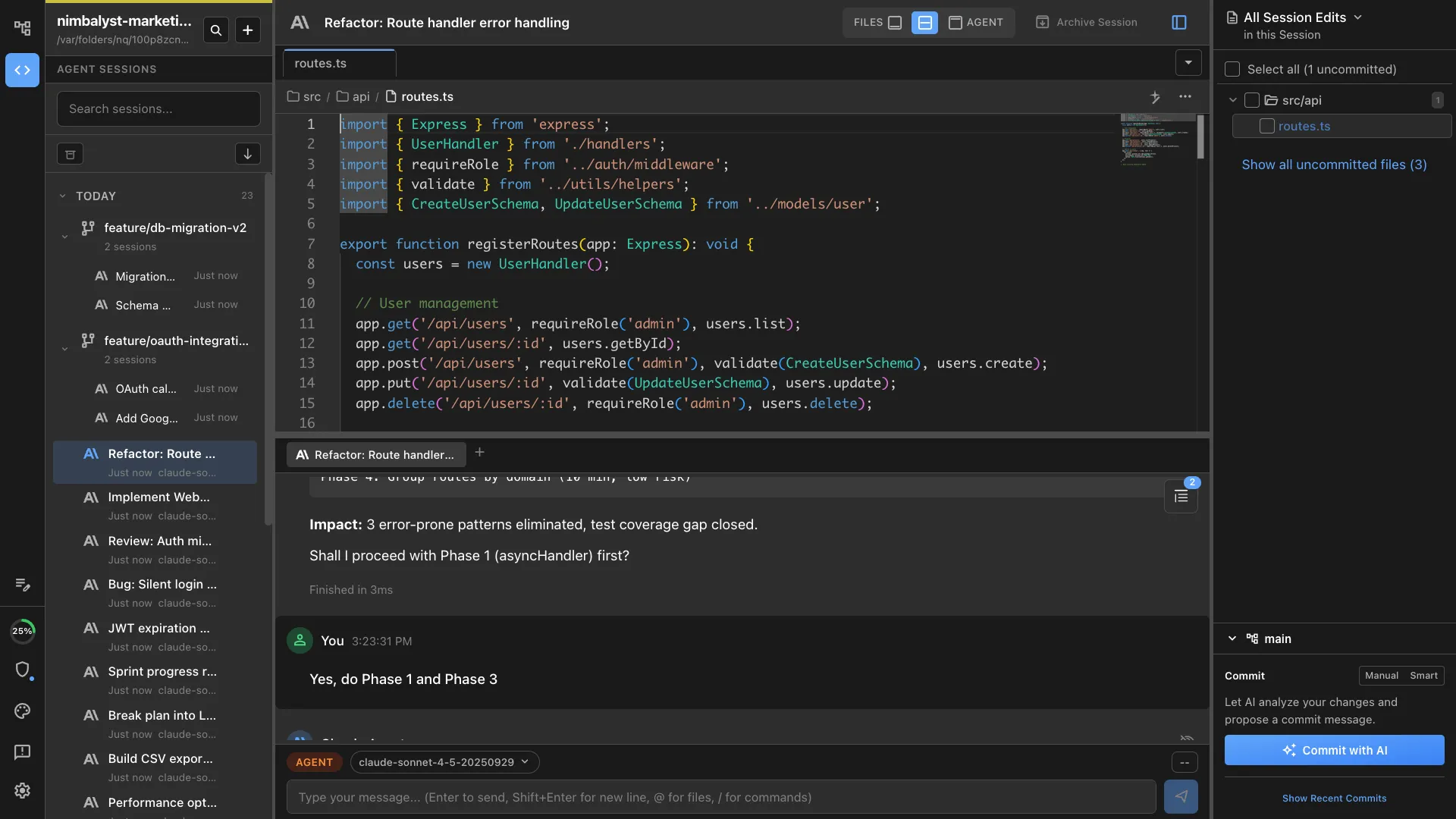
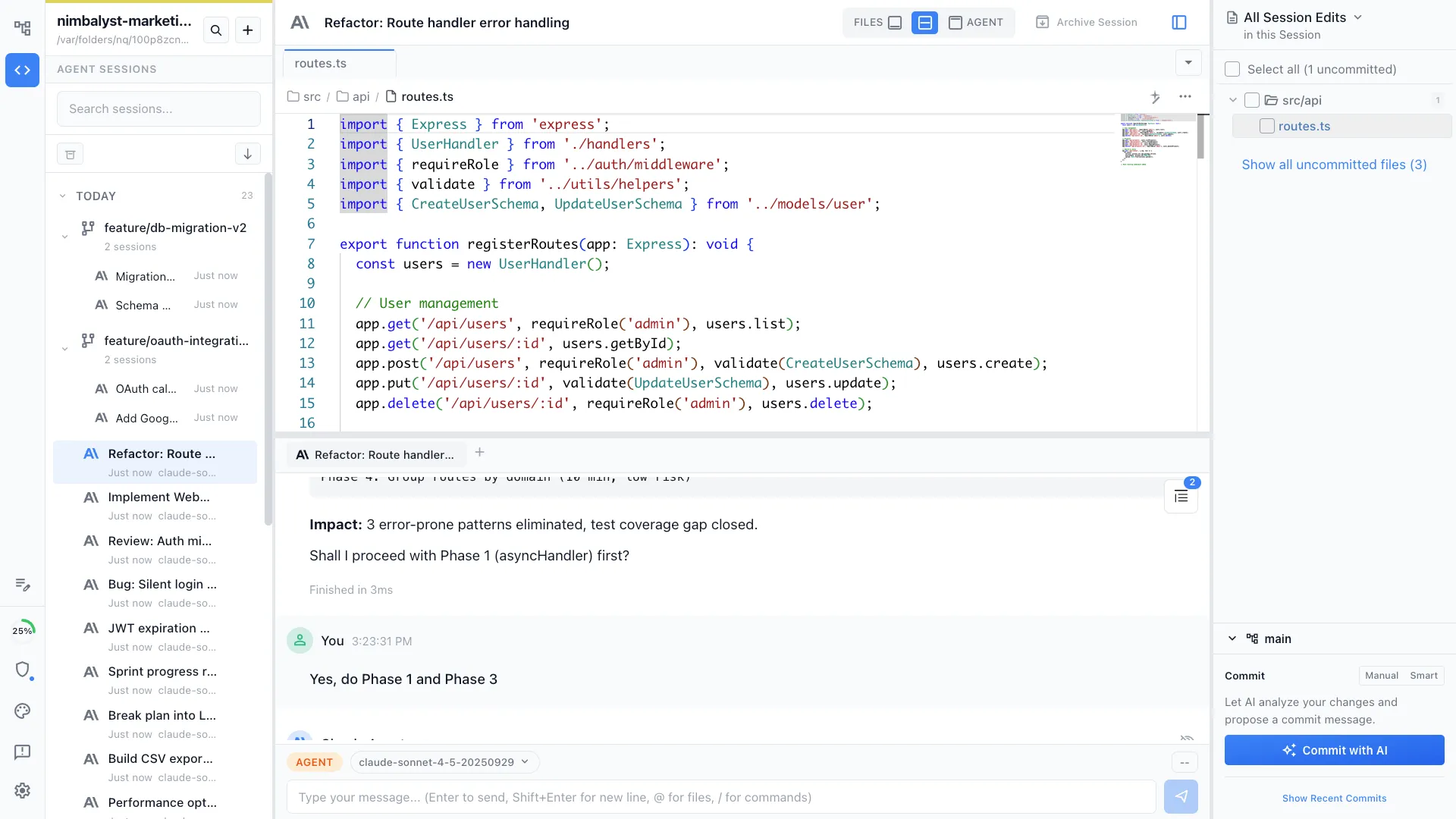
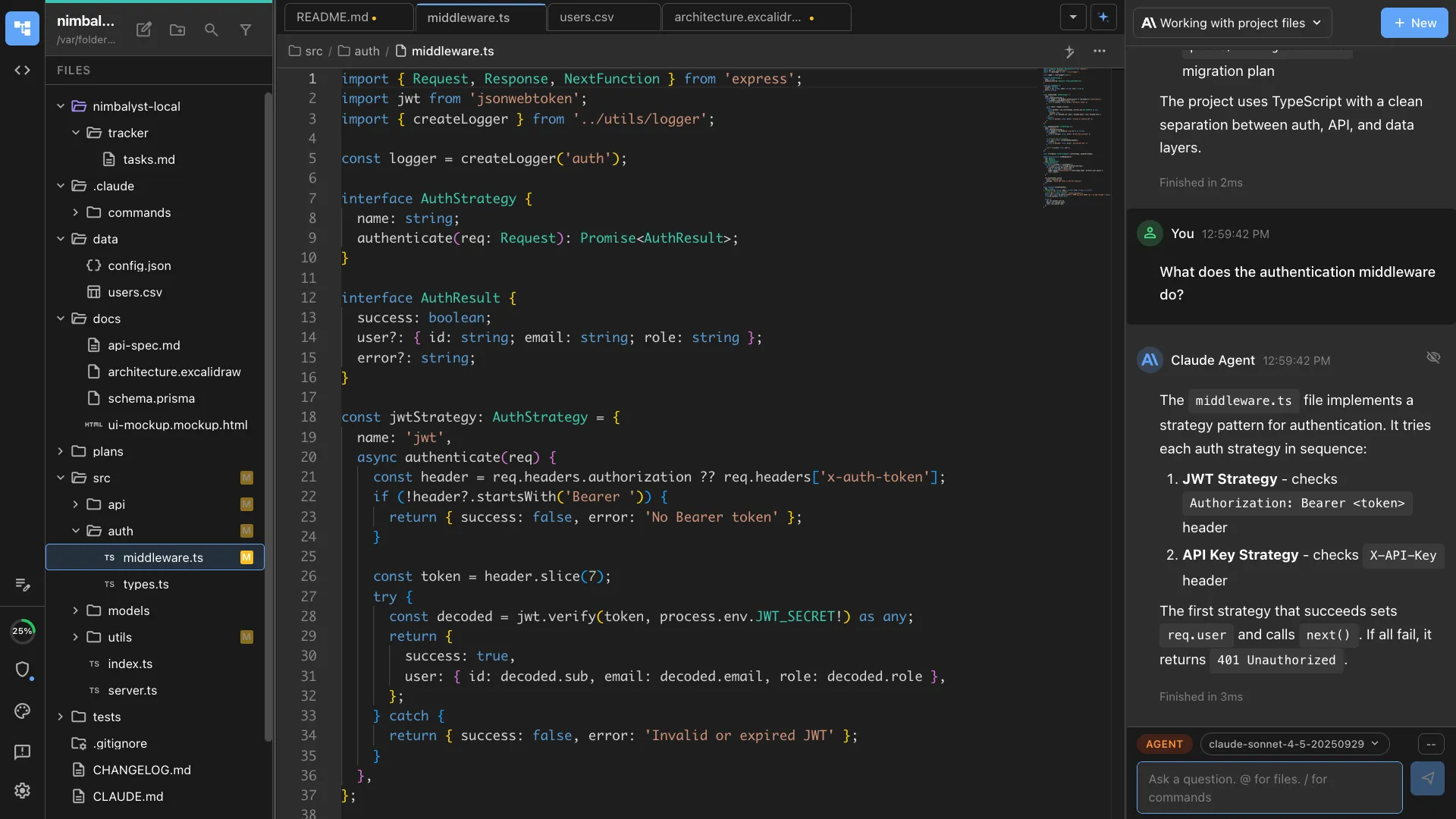
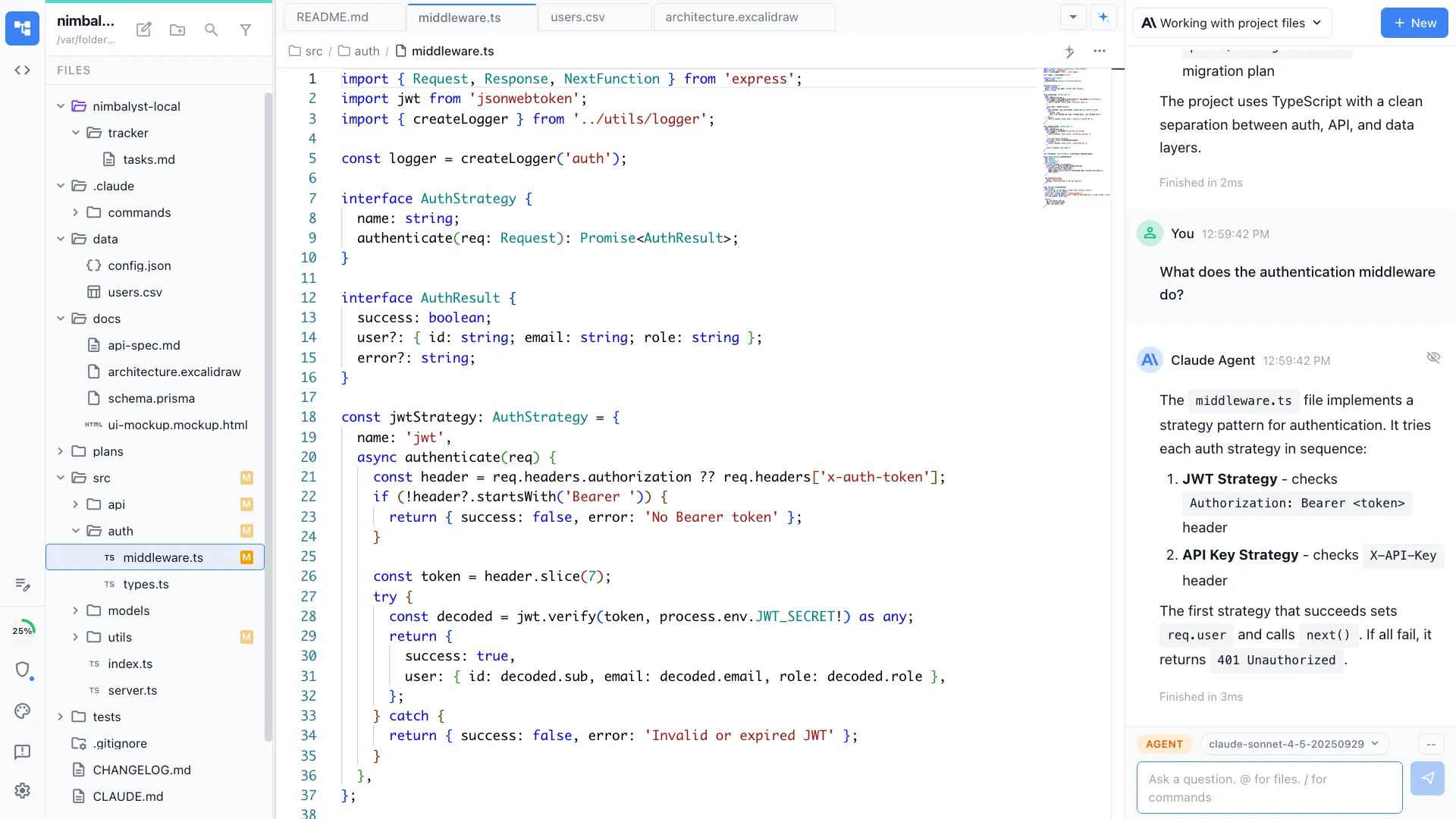
Nimbalyst is an AI-native workspace built on top of Claude Code and Codex. It adds a session kanban board for managing parallel agents, visual editors for markdown, mockups, diagrams, and data models, built-in planning and task tracking, and a mobile companion app. You can work spec-first when you want to, but you are not locked into a prescribed format.
Kiro
Kiro is Amazon's AI IDE that takes a spec-driven approach to development. You write specifications, and Kiro generates implementation plans, code, and tests. It emphasizes structured, predictable AI-assisted development with clear requirements.
Feature Comparison
Side-by-side breakdown
Nimbalyst Advantages
Where Nimbalyst shines
Parallel session management
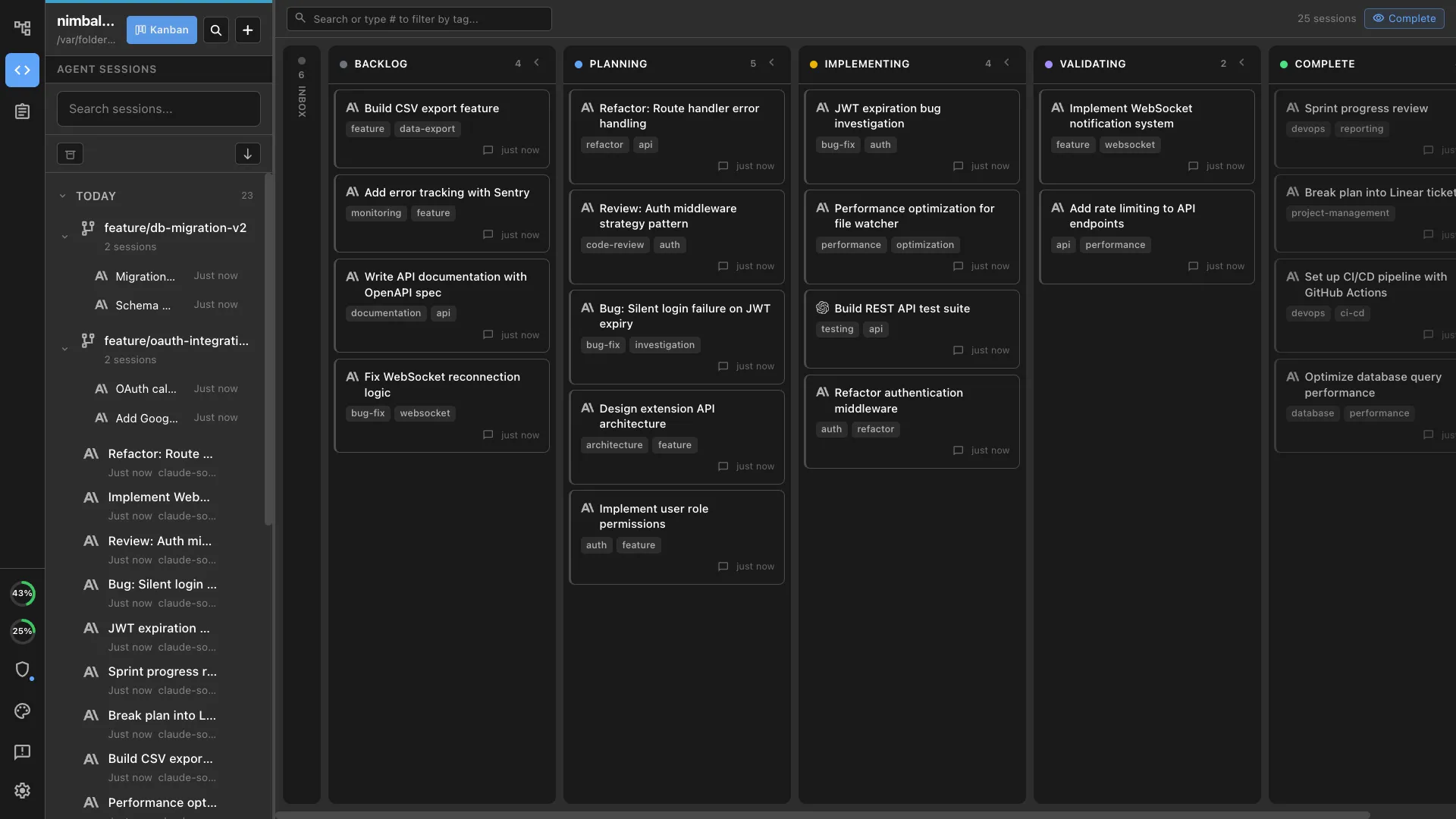
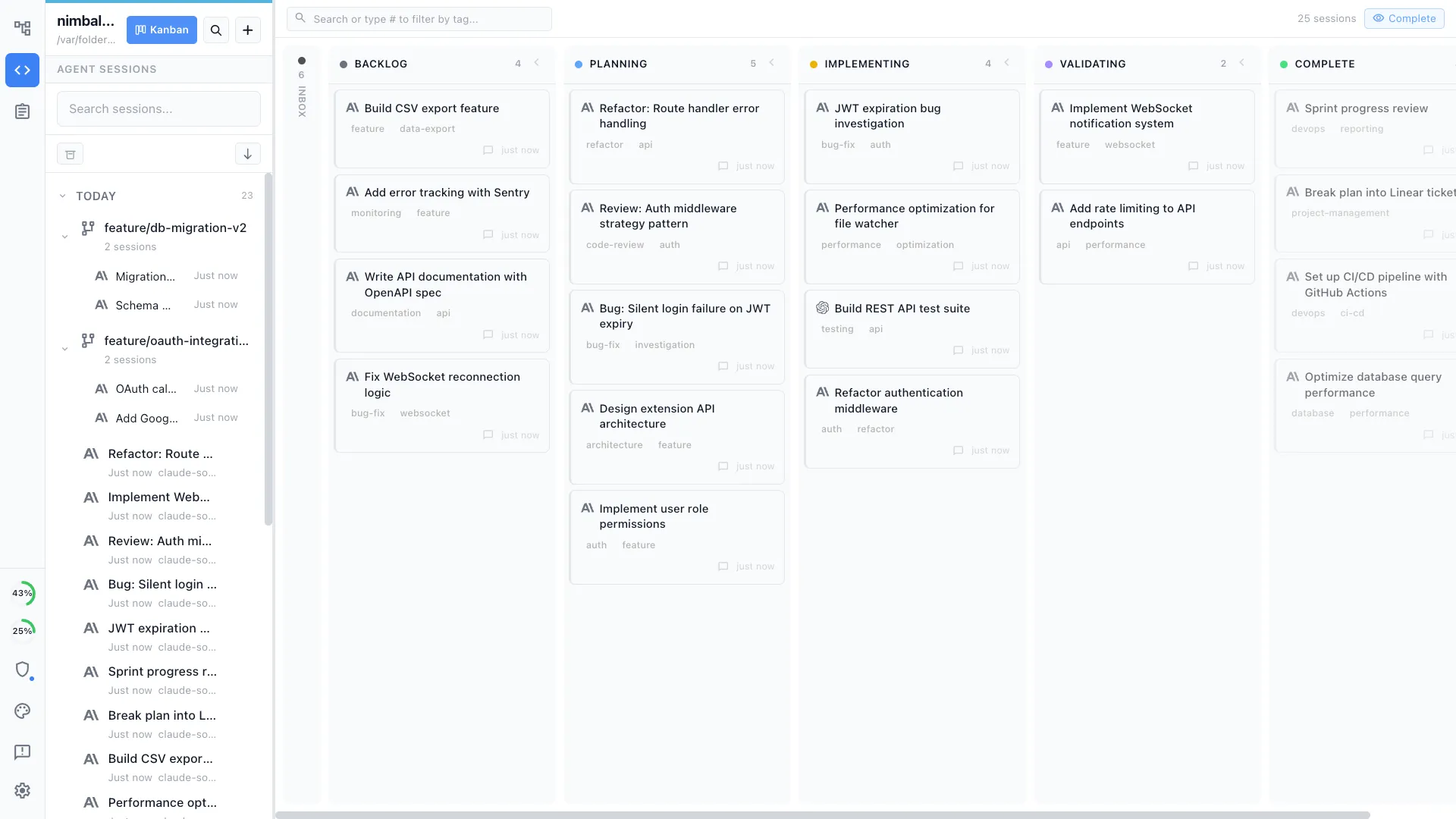
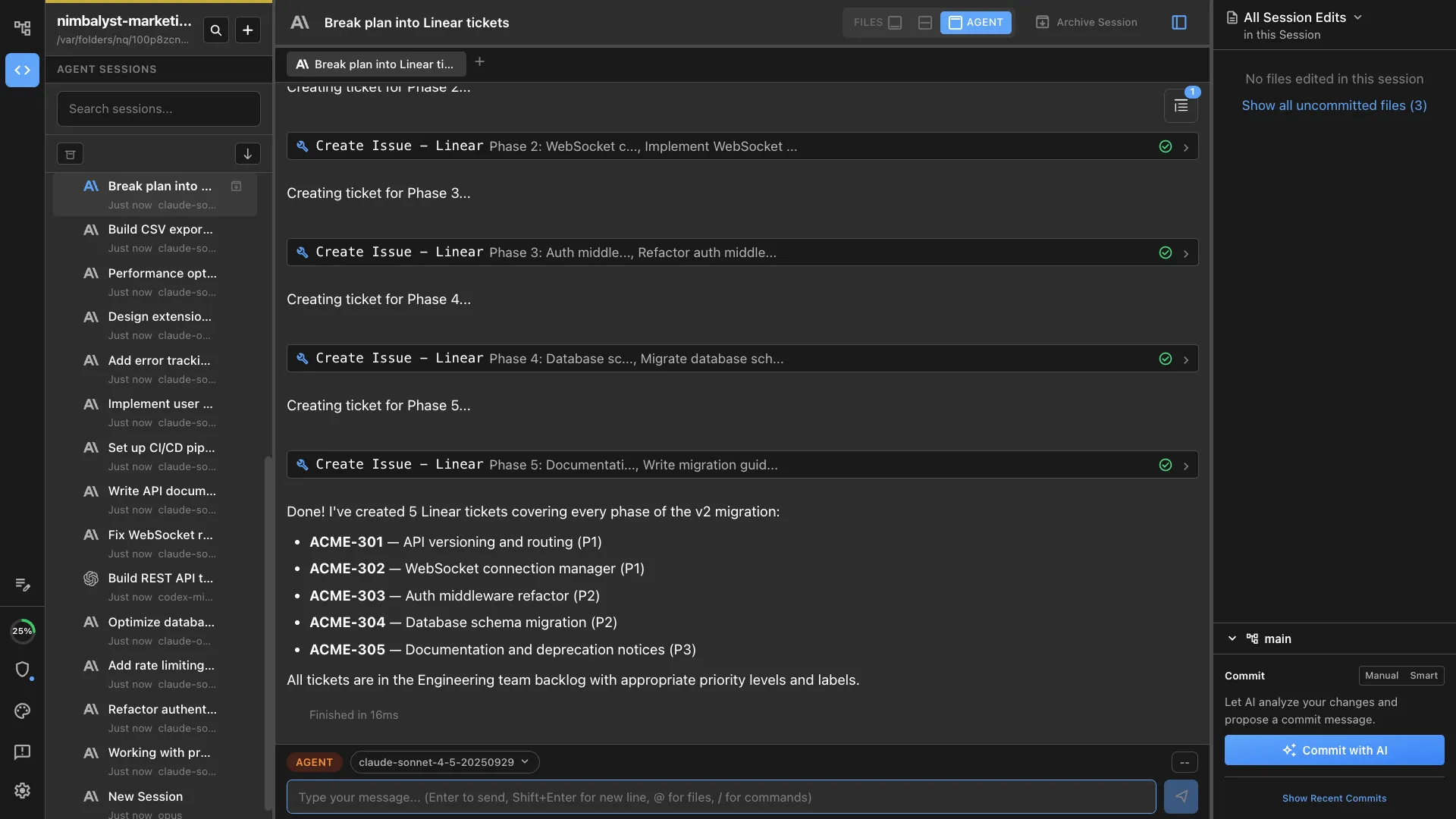
Run multiple AI sessions across projects on a kanban board. Kiro handles one spec at a time.
Visual editors
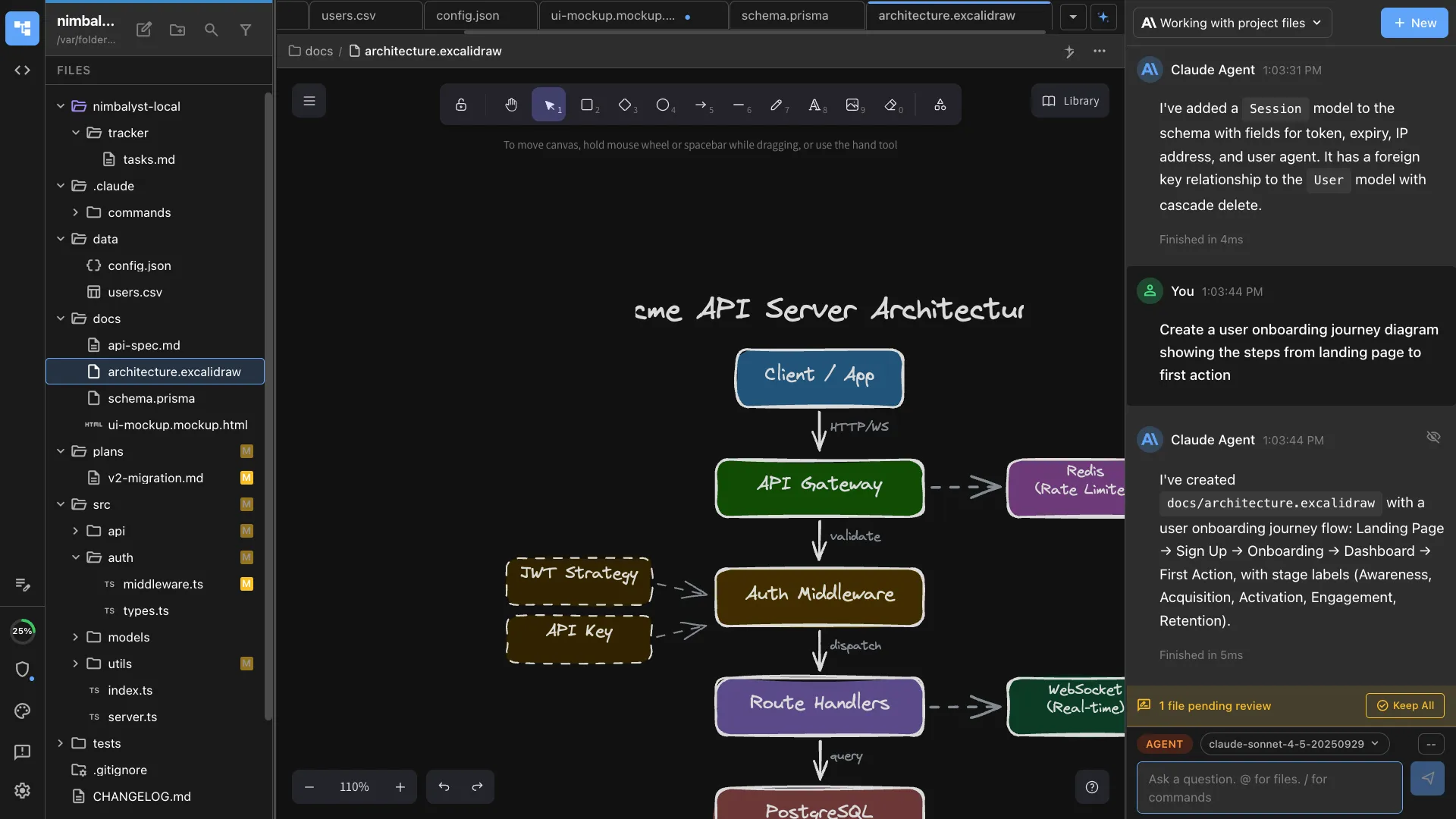
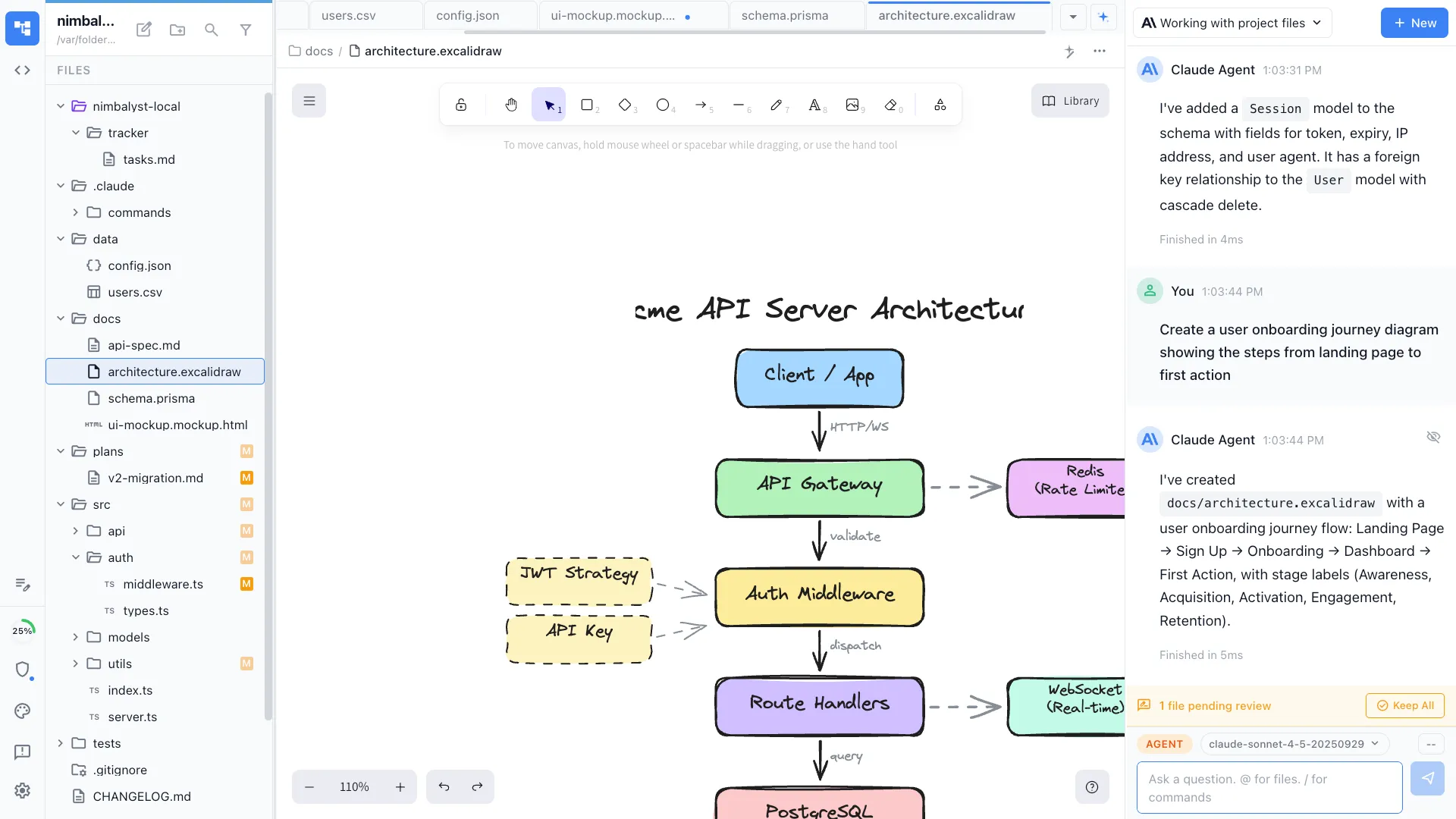
Create architecture diagrams, mockups, and data models in visual editors. Kiro focuses on spec documents and code.
Flexible planning
Nimbalyst's planning is flexible: markdown plans, task trackers, and roadmaps you structure however you want. Kiro requires its specific spec format.
Your coding agents, integrated
Claude Code, Codex, and other supported agents work directly with the files, plans, tasks, and visual artifacts in the workspace.
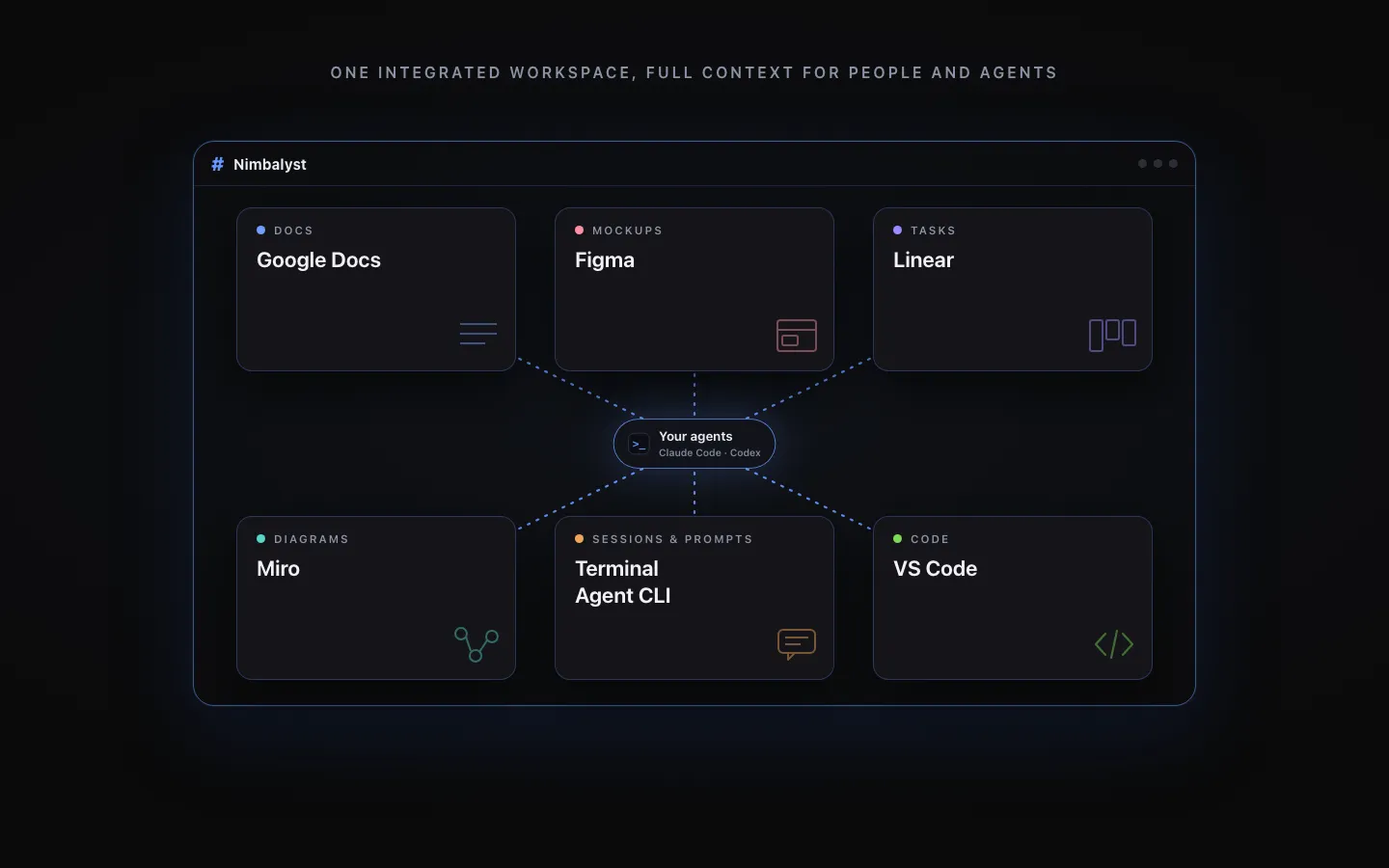
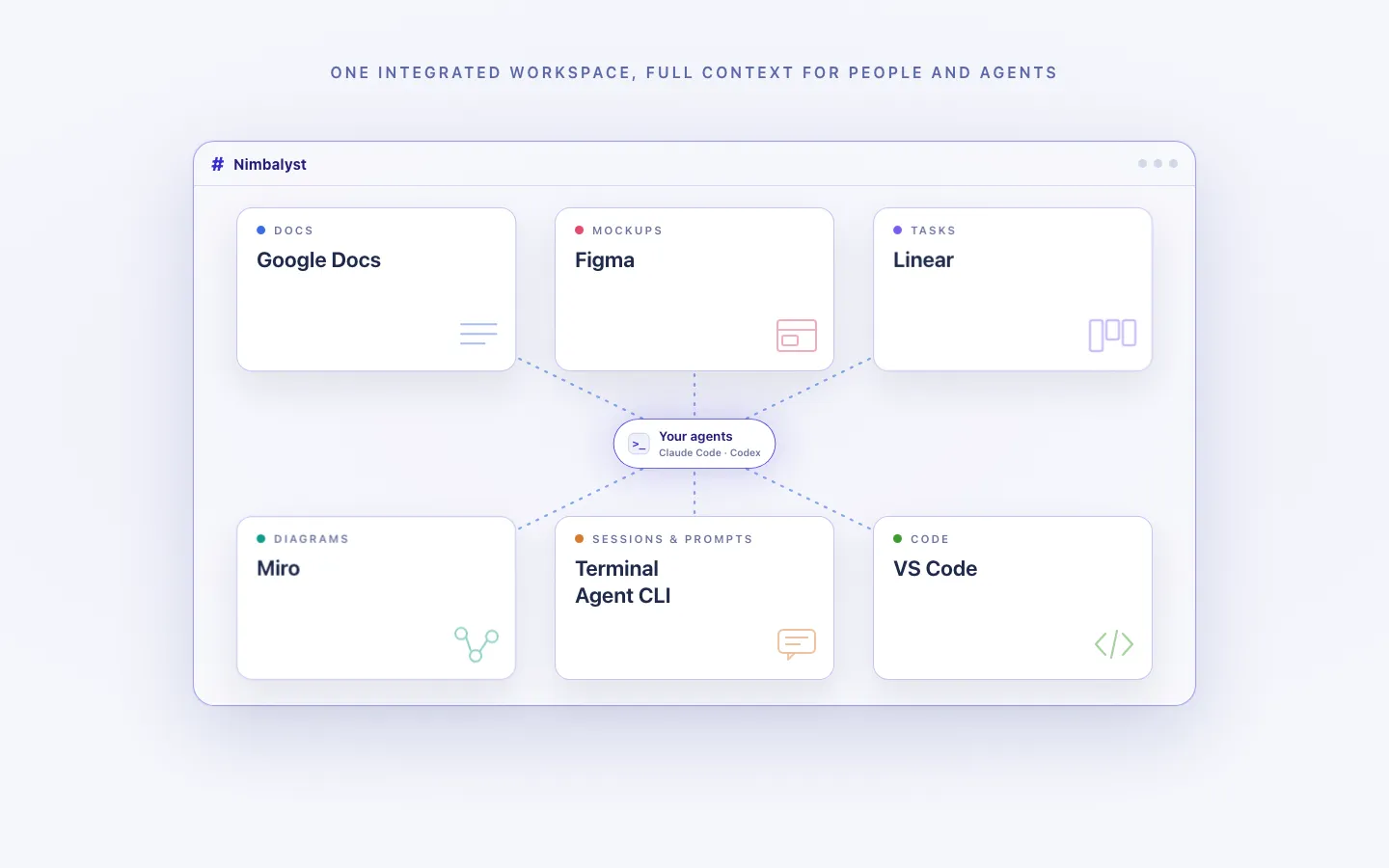
Every artifact in one workspace
Edit markdown, mockups, diagrams, code, and CSV data together, with the same project context available to people and agents.
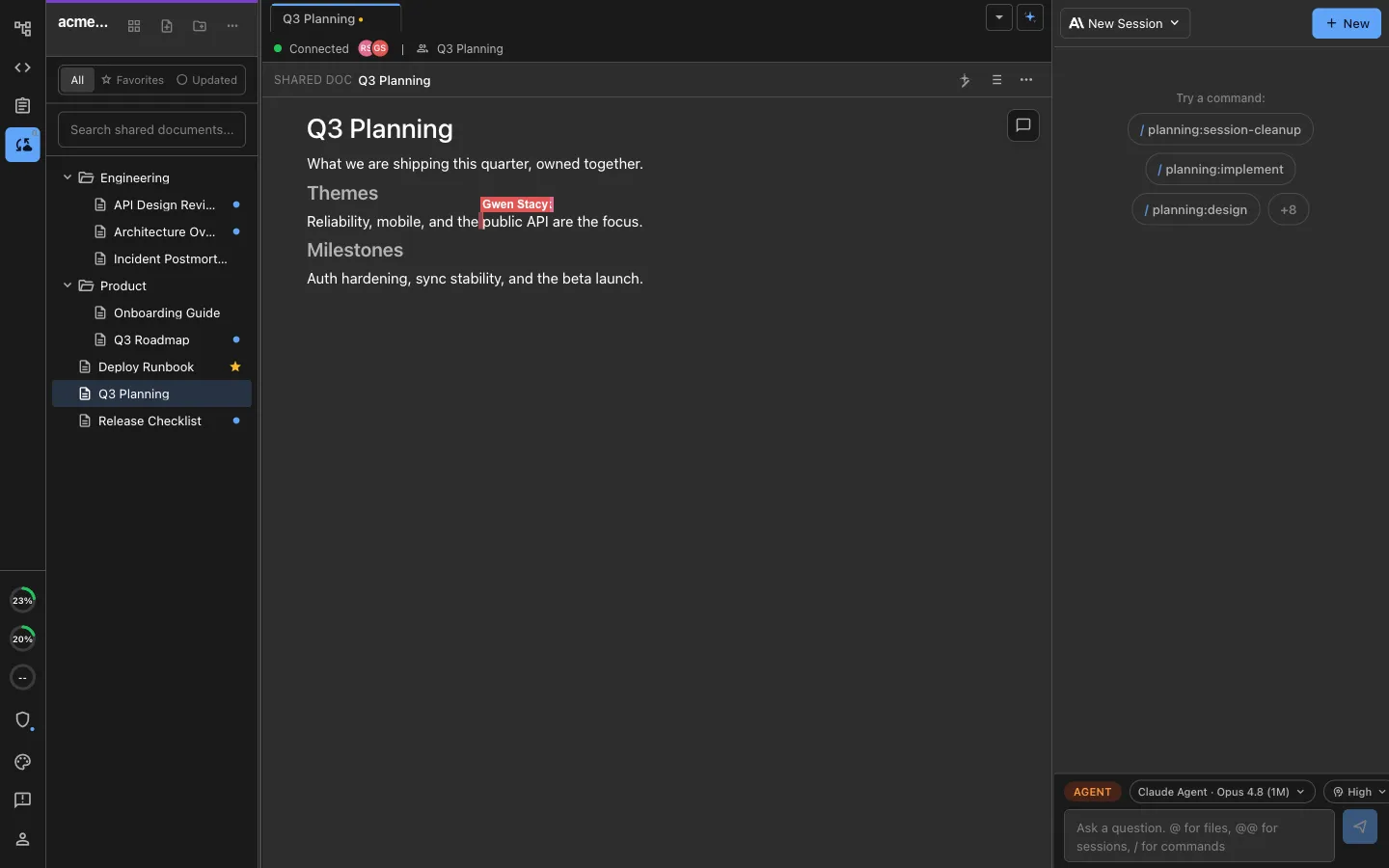
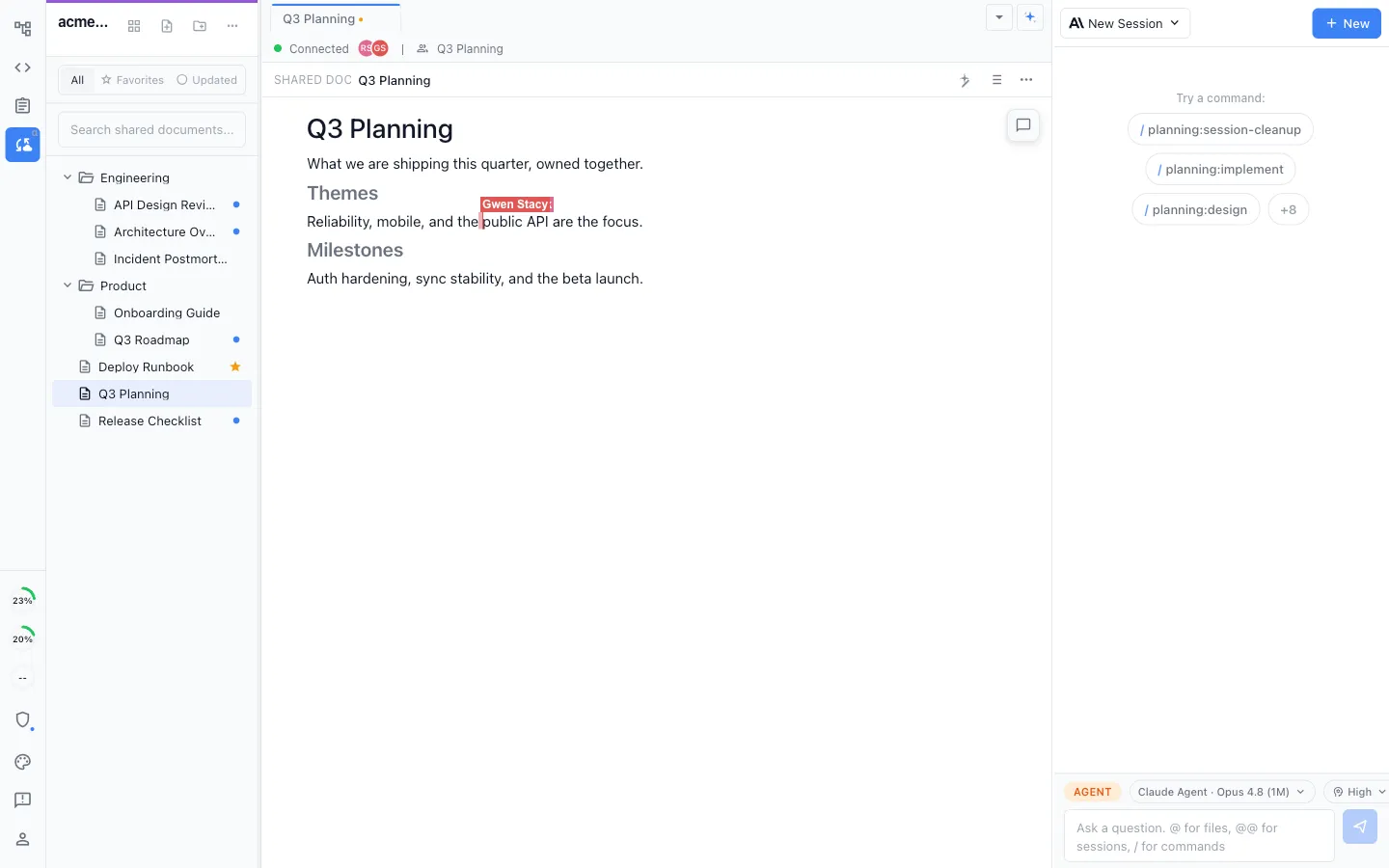
Local for individuals, collaborative for teams
Work locally in the MIT-licensed desktop app, or collaborate in real time on shared docs, diagrams, mockups, and trackers.
Honest Assessment
Where Kiro is stronger
Opinionated spec workflow
Kiro makes spec-driven development the default path. Nimbalyst can work from specs too, but Kiro is more prescriptive out of the box for teams that want one built-in process.
AWS integration
Kiro has deep integration with AWS services, making it ideal for teams building on Amazon's cloud infrastructure.
Default spec-to-test loop
Kiro tightly couples specs, implementation, and generated tests in one default workflow. Nimbalyst can generate tests too, but Kiro packages that loop more explicitly.
Recommendation
Who should use which
Choose Nimbalyst if…
You want a flexible workspace with visual editors, session management, and planning tools that work with Claude Code and Codex across any infrastructure.
Choose Kiro if…
You prefer a structured, spec-driven approach to development, build on AWS, and want automated testing derived from specifications.
More Comparisons
Related comparisons
From the Blog
Related guides
Agent orchestration
Run multiple agents in parallel and keep visible status across every session on one board.
Best AI IDEs in 2026: Complete Comparison
A category view of IDE-native AI tooling and where Kiro-style workflows fit.
Coding with AI Agents: Best Practices for 2026
Helpful if you care more about specs and review loops than editor choice alone.
Want spec-driven development plus session management, task tracking, and visual editors? Try Nimbalyst free.
Free for individuals. Works with your existing Claude Code or Codex subscription or API key.
Nimbalyst Teams is multiplayer. Your whole team, Codex, and Claude Code in one shared workspace.