Product Management
AI-drafted strategy memos
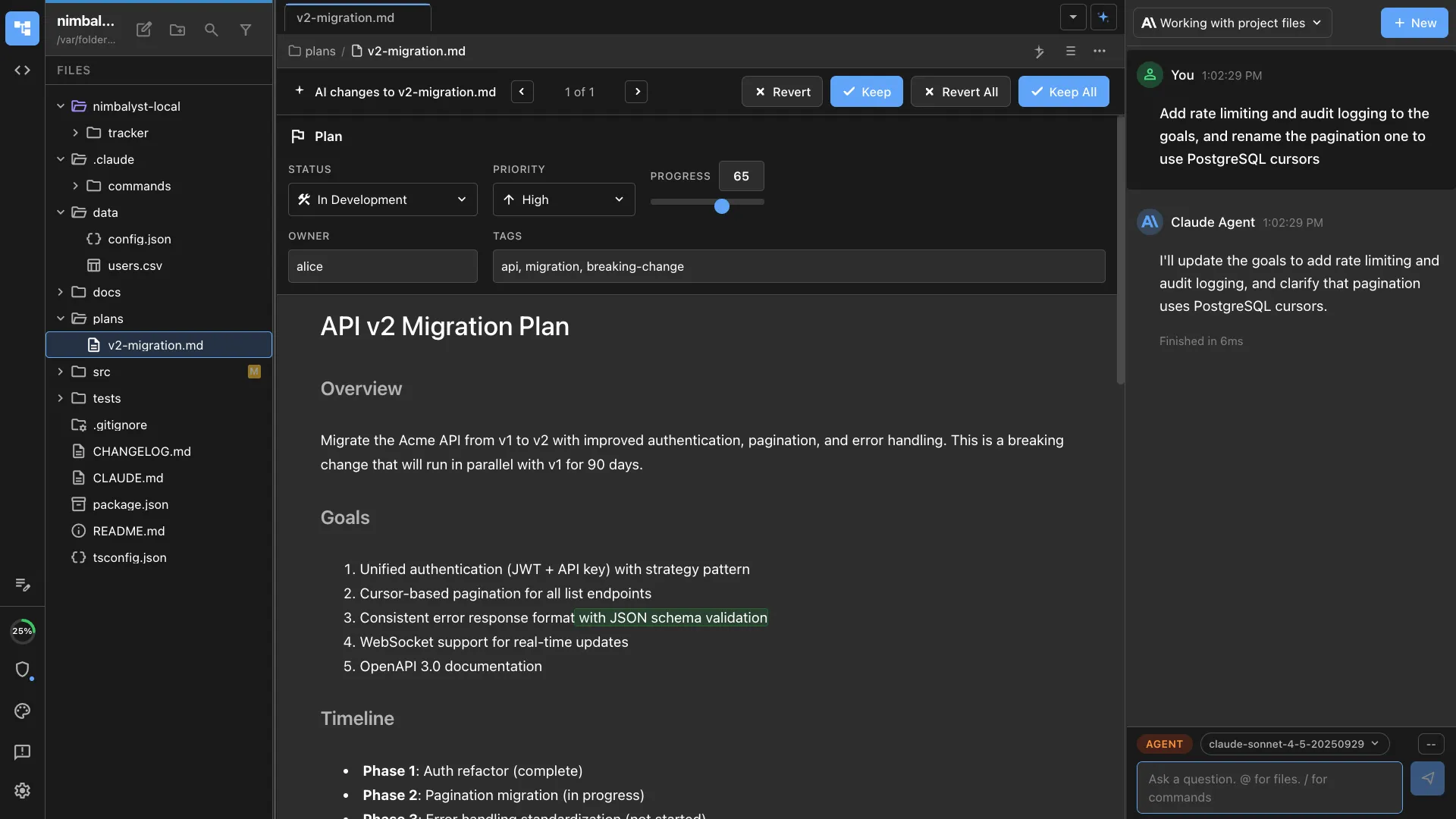
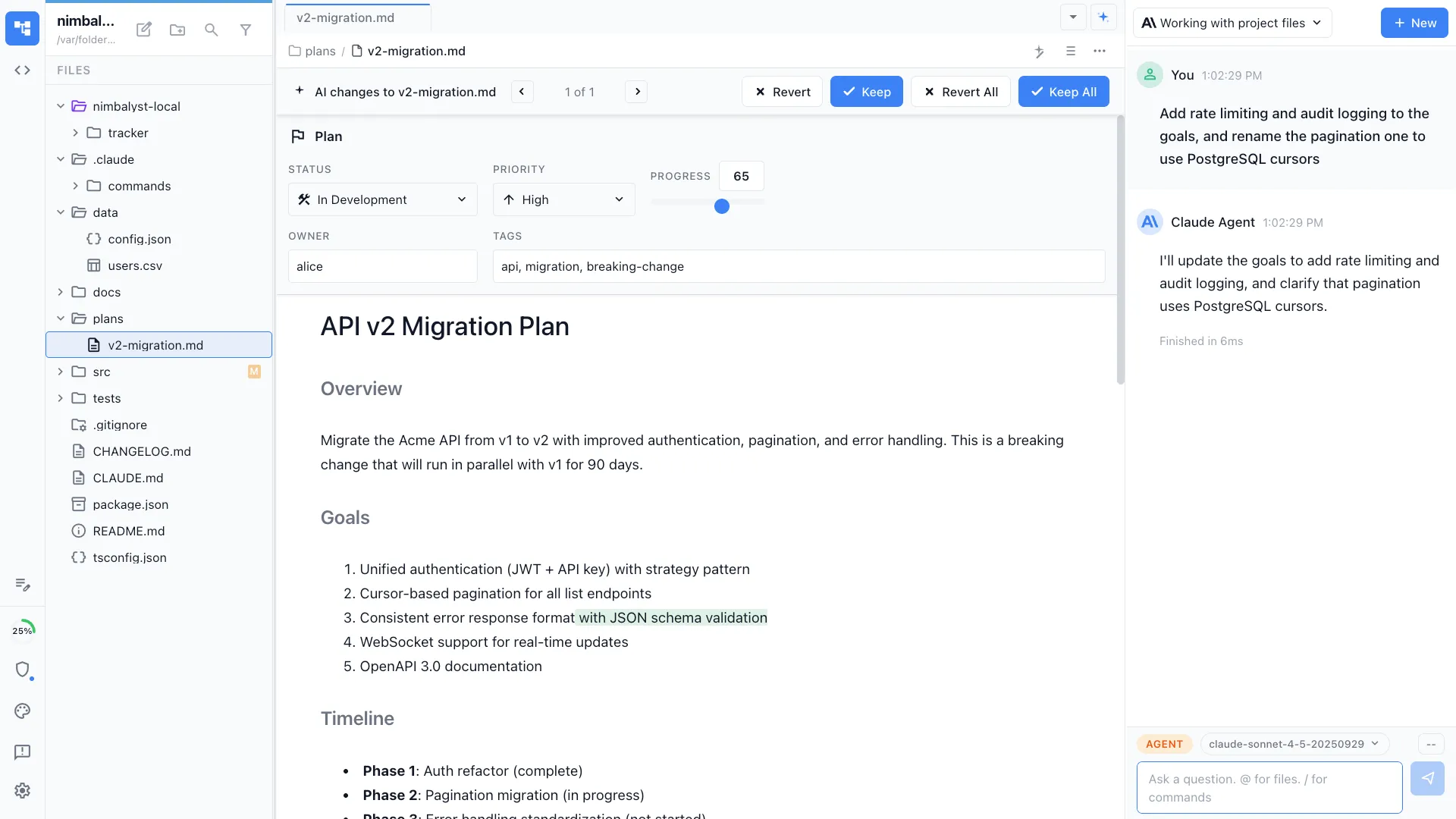
Run /strategy and describe the decision you need to make. The agent drafts a strategy memo with context, options, trade-offs, and a recommended approach.
Free for individuals. Works with your existing Claude Code or Codex subscription or API key.
Draft strategy memos with clear rationale, alternatives considered, and recommended approach. Structured for executive decision-making.
Capabilities
Think clearly, write clearly
Structured reasoning
Memos follow a proven format — context, problem, options, trade-offs, recommendation, and next steps. Clear thinking on the page.
Research-informed
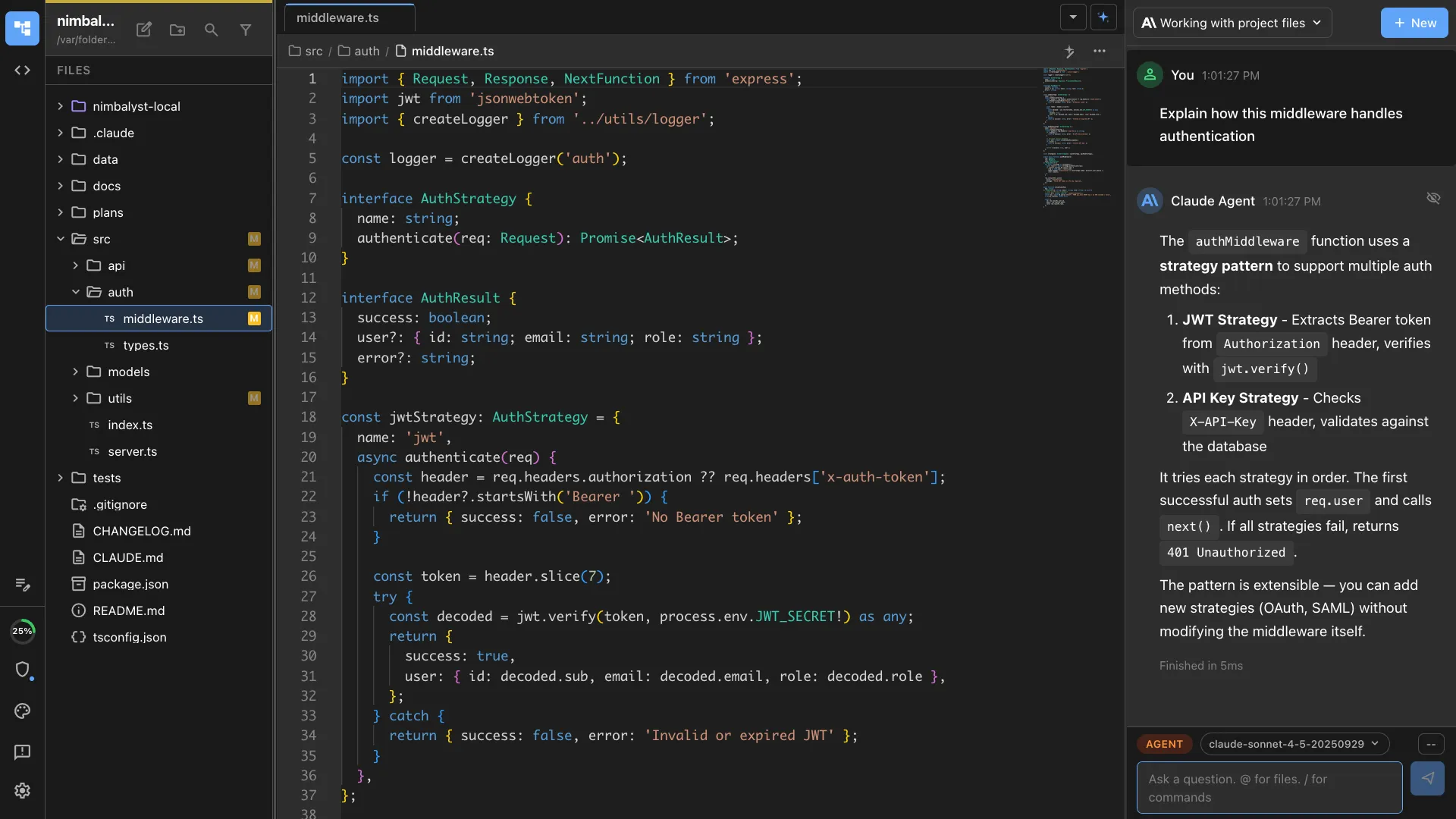
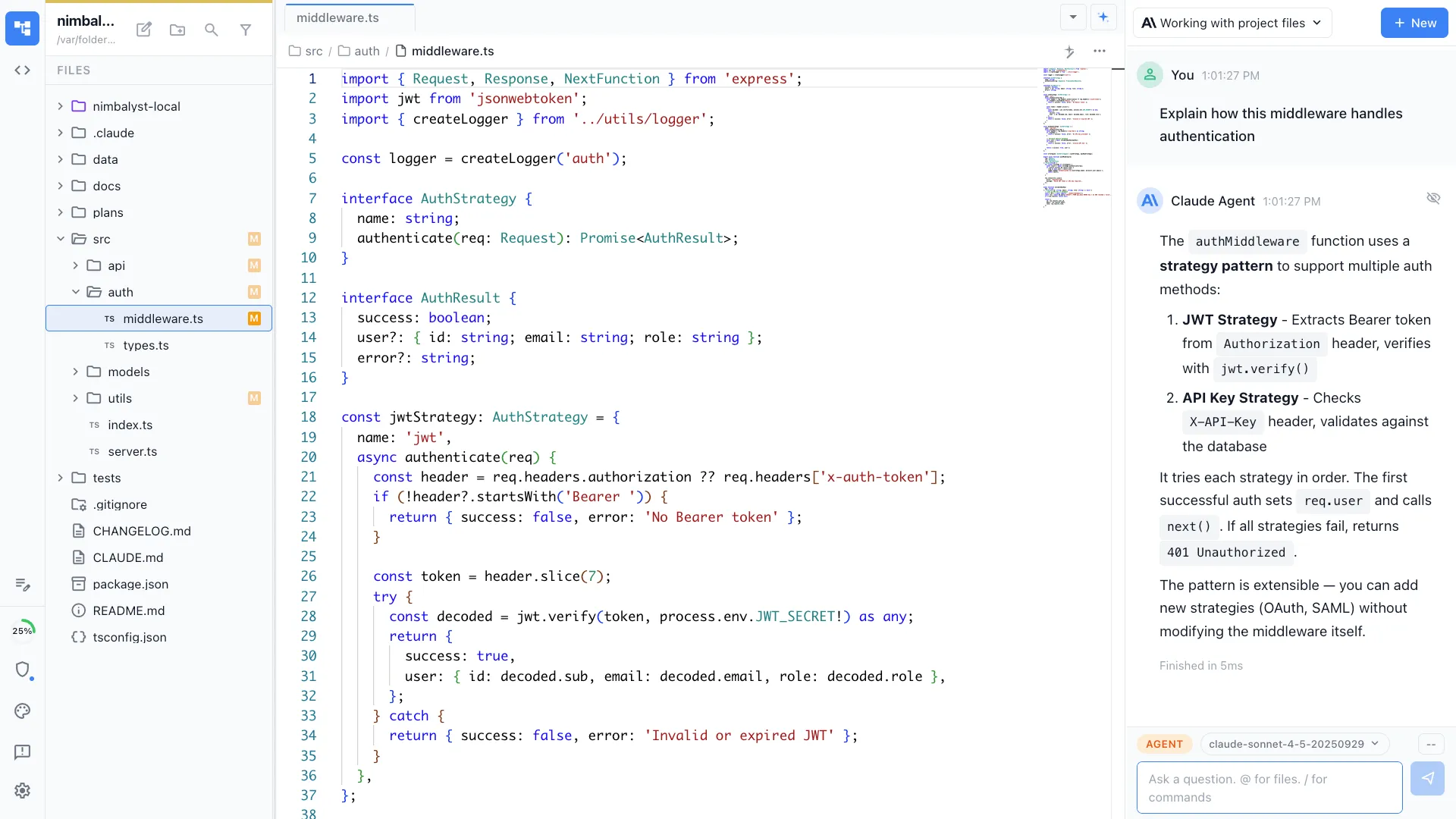
The agent can research competitors, market trends, and technical constraints to ground your strategy in evidence.
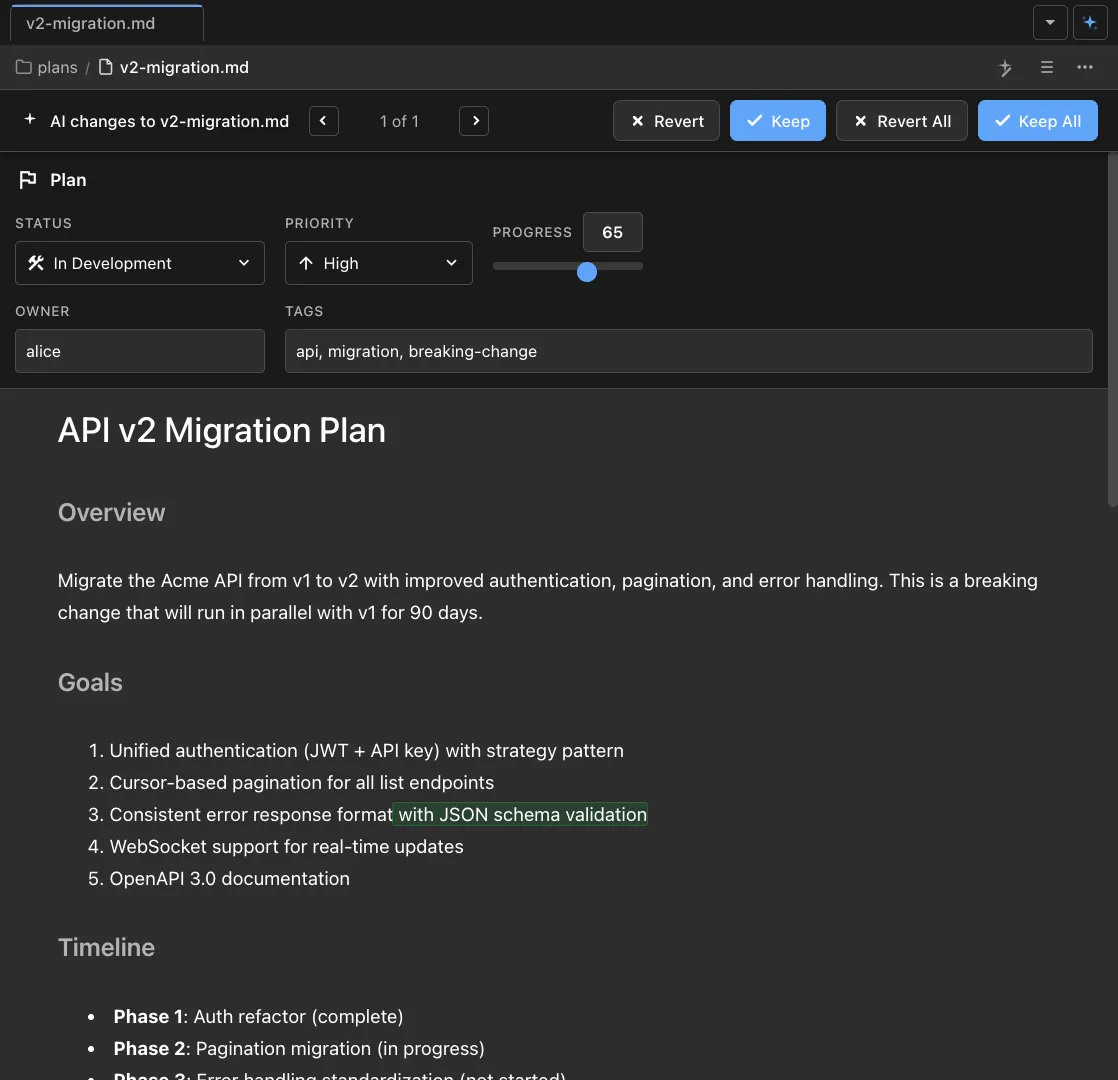
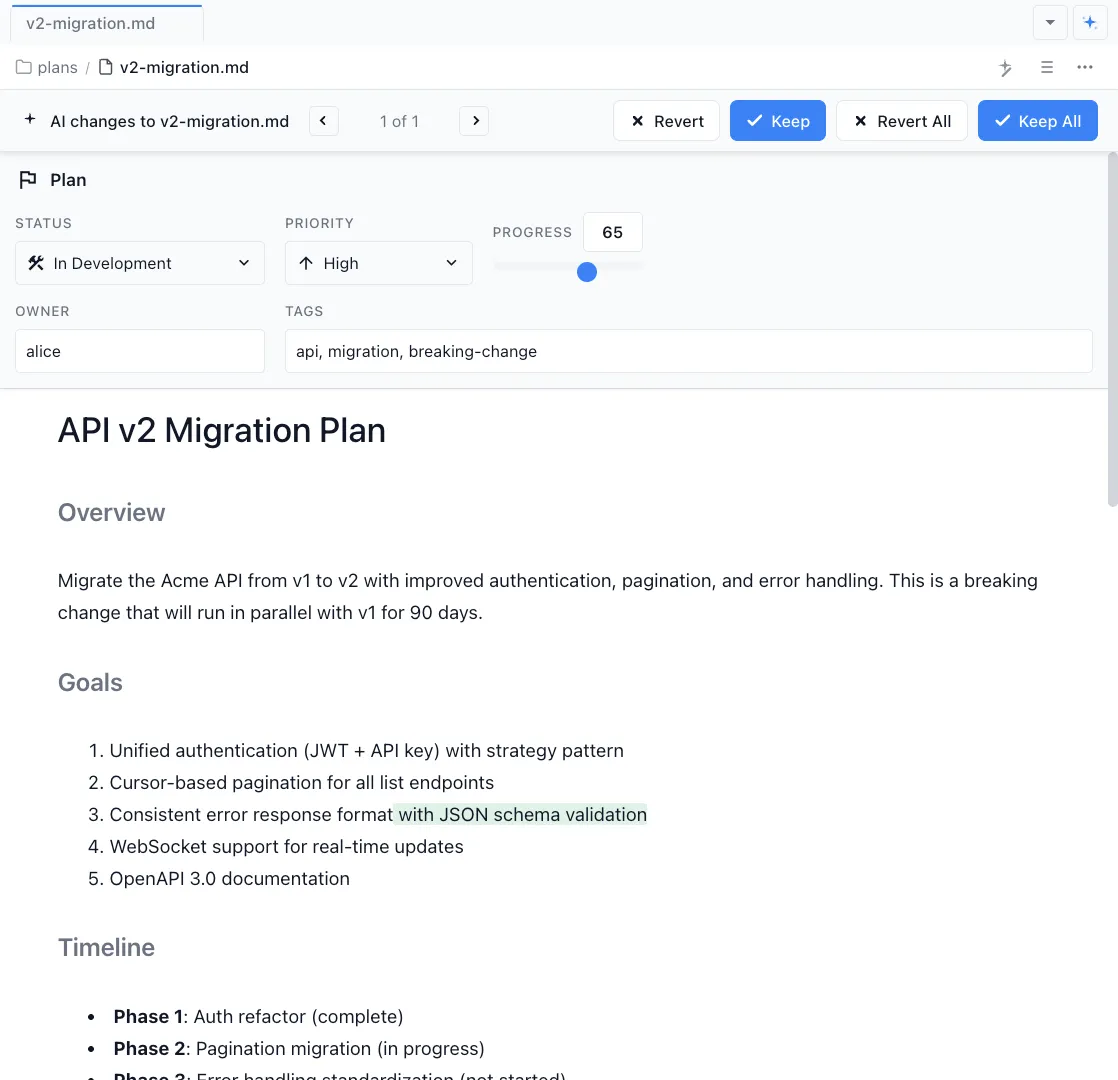
Stakeholder-ready
Output is formatted for executive review — concise, well-structured, and focused on the decision to be made.
How It Works
How /strategy works
Type /strategy
Run the command and describe the strategic question or decision. Include context, constraints, and who needs to decide.
Agent drafts the memo
A strategy memo is generated with problem framing, options analysis, trade-offs, and a recommended path forward.
Refine and share
Iterate on the memo through conversation. Sharpen the reasoning, add data, and prepare it for stakeholder review.
Try It
Example prompts
/strategy should we build or buy for the analytics dashboard? /strategy pricing strategy for the enterprise tier /strategy platform vs. product approach for our extension system Full Skill Source
Use this skill in your project
Copy the full text below or download it as a markdown file. Place it in your project's .claude/commands/ directory to use it as a slash command.
---
name: strategy-memo
description: Draft strategy memos with rationale and alternatives. Use when communicating strategic decisions or driving alignment on major product decisions.
---

# strategy

You are an expert helping a Product Manager create strategy memos. Help the user draft comprehensive strategy memos that communicate strategic decisions, rationale, and plans to drive alignment on major product decisions.

## Strategy Memo Structure

```markdown
# Strategy Memo: [Topic]

**Author**: [Name]
**Date**: [Date]
**Status**: [Draft / For Review / Final]

---

## TL;DR
[3-4 sentence executive summary of the recommendation]

---

## Context
[What's the situation? Why are we thinking about this now?]

### Current State
[Where we are today]

### Market Forces
[What's changing in the market/industry?]

### Opportunity or Problem
[What's the core issue or opportunity?]

---

## Recommendation
[Clear, specific recommendation in 1-2 paragraphs]

---

## Rationale
[Why this is the right path forward]

### Strategic Alignment
[How this aligns with company strategy and goals]

### User Value
[How this benefits users]

### Business Impact
[Revenue, retention, market position impact]

### Competitive Positioning
[How this affects competitive position]

### Risks & Mitigations
| Risk | Likelihood | Impact | Mitigation |
|------|-----------|--------|------------|
| [Risk 1] | [H/M/L] | [H/M/L] | [Plan] |

---

## Alternatives Considered

### Option 1: [Name]
**Pros**: [List]
**Cons**: [List]
**Decision**: [Why not this]

### Option 2: [Name]
**Pros**: [List]
**Cons**: [List]
**Decision**: [Why not this]

---

## Implementation Plan

### Phase 1: [Phase Name] (Timeline)
- [Milestone 1]
- [Milestone 2]

### Phase 2: [Phase Name] (Timeline)
- [Milestone 3]

### Resources Required
- [Team/people needs]
- [Budget needs]
- [Technology needs]

### Success Metrics
- [Metric 1]: [Target]
- [Metric 2]: [Target]

---

## Open Questions
- [ ] [Question 1]
- [ ] [Question 2]

---

## Appendix
[Supporting data, research, detailed analysis]
```

## Best Practices

1. **Start with TL;DR**: Put recommendation in first paragraph
2. **Show Your Work**: Explain how you arrived at the recommendation
3. **Address Alternatives**: Show you considered other options
4. **Be Specific**: Include timelines, metrics, resources needed
5. **Anticipate Objections**: Address concerns proactively
6. **Make It Scannable**: Use headers, bullets, tables
7. **Include Data**: Quantify impact wherever possible
8. **Be Honest About Risks**: No strategy is risk-free

## Memo Types

**Vision Memos**: Paint picture of future state (2-3 pages)
**Decision Memos**: Make choice between options (3-5 pages)
**Planning Memos**: Outline execution strategy (4-6 pages)
**Problem/Solution Memos**: Define problem and propose solution (2-4 pages)

## What to Ask

If the user needs more guidance:
- What strategic decision or topic is this memo about?
- What's the current situation or problem?
- What do you recommend?
- Why is this the right approach?
- What alternatives did you consider?
- What are the key risks?
- What resources are needed?
- How will you measure success?

## Review Checklist

Before sharing:
- [ ] TL;DR summarizes recommendation clearly
- [ ] Context explains why now
- [ ] Rationale connects to business goals
- [ ] Alternatives are evaluated fairly
- [ ] Implementation plan is specific
- [ ] Success metrics are defined
- [ ] Risks are identified with mitigations
- [ ] Document is scannable and well-formatted

Now help the user create their strategy memo.
Related Skills
Skills that work well together
Explore More
Related features and use cases
Nimbalyst is the open-source visual workspace for building with Codex, Claude Code, and more
Free for individuals. Works with your existing Claude Code or Codex subscription or API key.
Nimbalyst Teams is multiplayer. Your whole team, Codex, and Claude Code in one shared workspace.